
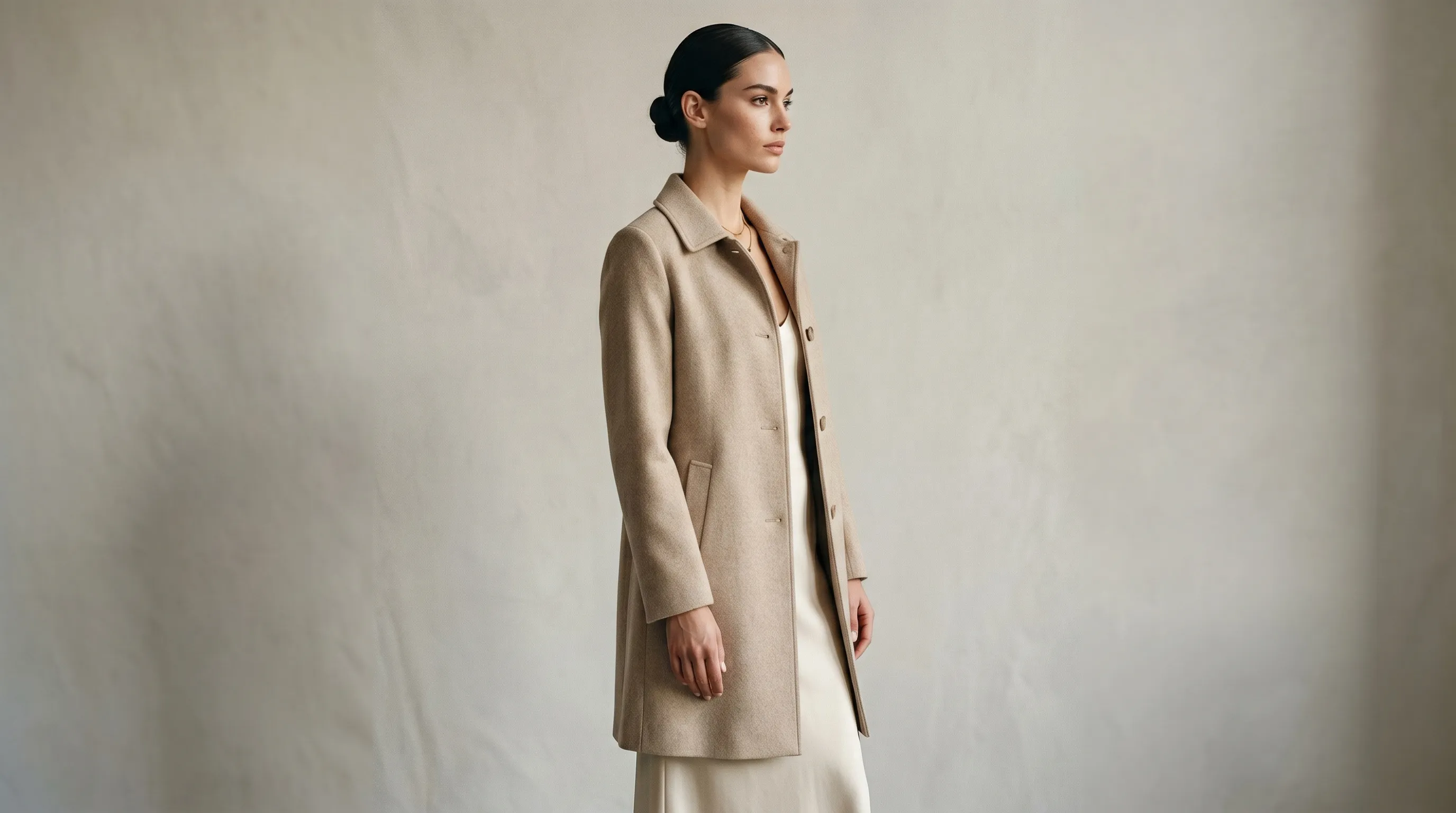
Nightjar and FASHN offer the clearest no-card trials for creating commercially usable AI fashion images. Claid gives the strongest disclosed allowance for testing both a web app and an API. Modelia, The New Black, and Vmake are useful previews, but their free output is not licensed for commercial use. Botika documents an eight-credit, no-card trial under a limited fashion-business license, but its trial watermark and resolution still need checking. Photoroom advertises free access without publishing enough trial detail to budget a production test confidently.
That distinction matters. A free account is not a usable trial when the fashion feature is locked, every export is watermarked, or the license excludes product listings. This audit checks each vendor's official pricing, product, terms, and privacy pages. For a comparison focused on capabilities rather than free access, read our guide to the best AI fashion model tools.
| Tool | Free access | Card required? | Watermark and commercial use | Export | Paid path and scale |
|---|---|---|---|---|---|
| Nightjar | 6 Credits | No | No watermark; commercial use allowed | JPEG, PNG, or WebP; up to 4K where supported | Studio is $25/month for 150 Credits; web, Shopify app, and AI assistants through MCP; API with an active paid subscription |
| FASHN | 10 app credits | No | Commercial use allowed; trial watermark not publicly stated | Up to 4K on paid app plans | Basic is $19/month for 200 credits; separate usage-priced API |
| Claid | 50 web credits plus 50 API credits | No | Claid does not claim copyright in output; trial-use and watermark language are not explicit | Up to 128 MP on the web trial | API starts at $59 for 1,000 credits; web business pricing is quote-based |
| Botika | 8 credits | No | Trial watermark not public; commercial use under a limited fashion-business license, not output ownership; trial restrictions may apply | Paid plans advertise 2K or 4K by tier | Pro is $46/month billed annually; higher tiers add team features; API availability and plan eligibility unverified |
| Modelia | 20 credits each month | Not publicly stated | Watermarked and non-commercial | Up to 2K | One-time Project pack is $12 for 50 credits; API starts with Basic |
| The New Black | 3 credits | Not publicly stated | Commercial use is paid-only; trial watermark not publicly stated | Paid plans advertise 4K | Starter is $15/month for 200 credits; Shopify, API, MCP, and seats on paid plans |
| Photoroom | Paid-plan trial; Free plan excludes AI Fashion Models | Trial details not public | Free accounts are non-commercial; trial watermark terms are not public | 1K on Pro, 2K on Max, 4K on Ultra | Subscription pricing varies by region; API credits are separate |
| Vmake | 20 daily credits, valid for one day | Not publicly stated | Watermarked and non-commercial | 1080p on Free; paid tiers add 2K or 4K | Commercial use requires a paid plan; developer API uses separate credits |
What counts as an AI fashion model free trial in this audit?
A tool qualifies when its current public site offers either free fashion-model generation or a trial of a paid plan that includes it. We label preview-only access as such rather than pretending every free result is ready for a live store.
We checked official public sources on September 3, 2026; Botika's trial, licensing, and API statements were rechecked on September 16, and Photoroom's pricing on September 26. If a vendor does not publish the allowance, card requirement, watermark, or license, the table says “not publicly stated.” Silence is not evidence of a favorable term.
The order reflects how useful each offer is for a real buying decision. It considers:
- Whether you can test the fashion workflow on your own product
- How many useful outputs the allowance buys
- Whether a card or automatic conversion is disclosed
- Watermark, resolution, and commercial-use restrictions
- Model reuse, batch, team, integration, and API options after the test
- What the vendor says about ownership, retention, and model training
Which AI fashion model generators have the strongest free trials?
1. Nightjar
Nightjar is the strongest free trial for brands testing whether the same person and art direction can survive a change of garment. Reusable Fashion Models preserve identity, while Photography Styles, Poses, Camera Distance, Locations, and Recipes preserve the shoot direction between products.
- Best for: Brands that need the same model identity and photographic direction across a collection
- Free access: New accounts receive 6 Credits without a card. A custom Fashion Model costs 1 Credit to create, leaving enough for five 1K or 2K Product Photography Single shots. If you use a built-in Fashion Model, all six Credits can go to 1K or 2K Single shots. A completed 4K Single shot costs 2 Credits.
- Pricing and scale: Studio costs $25 per month for 150 Credits. Active paid subscriptions include API access. Nightjar also runs as an embedded Shopify app and inside Claude, Claude Code, and Codex through MCP, the open standard AI assistants use to connect to other tools. Connecting an assistant is free, needs no API key, and spends the same Credits, including the free ones, on the same Fashion Models, Poses, and Recipes; see product photography in Claude and the Nightjar MCP guide. Products can hold multiple Product Photos, while Recipes save the reusable creative setup.
- Rights and data: Nightjar's terms allow lawful commercial use and give the user ownership of output. Nightjar's privacy policy also says customer content is not used to train or fine-tune AI models.
Six Credits support a compact catalog test. With a built-in Fashion Model, use Single shots to photograph one difficult garment, save the Photography Style, Location, Pose, and Camera Distance as a Recipe, and apply it to a second garment. Change the Pose, repeat both products, and compare the four outputs for model identity, garment fidelity, and photographic continuity. With a custom Fashion Model, spend 1 Credit creating the identity and use the remaining five 1K or 2K outputs to run the same test. Built-in visual review can retry an obvious failure without charging another Credit. See how Photography Styles create a consistent brand aesthetic and how to reuse one AI Fashion Model across a collection.
2. FASHN
FASHN offers a broad fashion-first no-card test. Its app covers virtual try-on, AI fashion models, product photography, editing, and fashion video, so the same initial allowance can test several garment-image jobs.
- Best for: A self-serve fashion workflow that spans on-model images, try-on, edits, and video
- Free access: A new account receives 10 credits with no card, according to FASHN's mobile and app page. Credit cost varies by mode, so 10 credits do not always equal 10 outputs.
- Pricing and scale: Basic costs $19 per month for 200 credits, supports up to 4K, and allows two invited team members. App and API balances are separate. The API is usage-priced from $0.075 per credit with a $7.50 minimum purchase.
- Rights and data: FASHN permits commercial use and says it does not train on user content. Its API documentation says generated files are retained for three days. The public pages do not clearly state whether free app output has a watermark or a lower export cap.
- Trade-off: The small grant is spread across tools with different credit costs. Decide which one workflow you are testing before spending it.
FASHN is a good first stop when fashion specialization matters more than building a reusable catalog system.
3. Claid
Claid offers the largest precisely disclosed dual trial: 50 credits in the web product and another 50 for the API. Its fashion operation turns product images into on-model results, while the wider suite also covers other ecommerce categories.
- Best for: Teams that want to test a visual workflow and an automation path before buying
- Free access: The web trial includes 50 credits with no card. AI Fashion costs 4 web credits, so the allowance produces up to 12 fashion generations with 2 credits left. The separate 50-credit API trial can cover up to 25 AI Fashion API images at 2 credits each.
- Pricing and scale: Self-serve API pricing starts at $59 for 1,000 credits. The public web page now routes larger production use toward custom business pricing, so the former Essentials and Professional prices found in older roundups should not be used.
- Rights and data: Claid says generated images are not subject to Claid copyright. Its business page says it does not sell, share, or use customer data to train its models. Free history lasts 24 hours. The public pages do not state a fashion-trial watermark policy or give trial-specific commercial-license language.
- Trade-off: Download the trial results promptly and obtain written confirmation of commercial rights before publishing them.
Claid's trial can answer a valuable operational question: does the same service work well enough in the interface and through an API?
4. Botika
Botika is built around the direct apparel job: turn flat-lay or ghost-mannequin product photos into images on synthetic models. Its official FAQ documents the trial allowance and card requirement, while trial watermark and export resolution remain unspecified.
- Best for: Apparel teams testing flat-lay-to-model conversion
- Free access: Botika's official FAQ offers 8 free credits without a credit card. Trial watermark and resolution are not specified. One photo costs 1 credit and one video costs 5 credits.
- Pricing and scale: Pro is shown at $46 per month when billed annually, with 600 credits per year and 2K output. Advanced adds 4K and team collaboration. API availability and plan eligibility were not established by the public pricing, product, and FAQ pages checked.
- Rights and data: Botika's terms say the customer does not own output. Instead, Botika grants a limited license for the customer's own fashion business. Its FAQ permits commercial use, and the terms govern free trials too, subject to trial-specific Order Form restrictions. Confirm any restrictions on use after the trial before publishing. The terms also grant broad rights to process customer data for operating and developing the platform.
- Trade-off: The workflow and allowance are clear; check trial export limits and the narrower license before production use.
Use a representative ghost-mannequin image for the test. Our guide explains how to turn a ghost-mannequin photo into an on-model photo.
5. Modelia
Modelia's permanent free tier is unusually transparent. It gives enough recurring credits to judge garment handling, but the watermark and non-commercial license make it a preview tier rather than a production trial.
- Best for: Comparing fashion transformations each month without a subscription
- Free access: Starter includes 20 credits monthly. Common fashion tools cost 3 credits at up to 2K, so the allowance covers six such images with 2 credits left. Free accounts do not include batch tools, consistent character, collaboration, or API access.
- Pricing and scale: A one-time Project purchase costs $12 for 50 credits that do not expire, adds commercial use, removes the watermark, and supports up to 4K. Basic is $35 per month with 250 credits and a two-month minimum; API access starts there.
- Rights and data: Modelia's terms are explicit: “All assets generated under Starter are watermarked and do not grant commercial rights.” They also allow free-tier content to be used for model training; paid-plan content is excluded from training.
- Trade-off: The free tier is useful for judging the service, not for publishing its results.
Modelia is one of the easier offers to evaluate because the restriction is stated before signup.
6. The New Black
The New Black combines AI model imagery with design ideation and commerce publishing. Its three-credit grant is enough for a small proof, while the paid product is designed to carry concepts through to Shopify and developer integrations.
- Best for: Fashion designers who want design, model, publishing, and integration tools in one system
- Free access: New accounts receive 3 credits. A standard model attempt costs 1 credit and a Pro attempt costs 3, according to its AI model tool. Commercial use is reserved for paid accounts. The free watermark and export resolution are not publicly stated.
- Pricing and scale: Starter costs $15 per month for 200 credits. Paid plans advertise 4K, bulk tools, Shopify publishing, API and MCP access, and multiple seats. One credit is roughly one standard image.
- Rights and data: The vendor says customer images are private and not reused for model training. Paid commercial rights do not replace the user's responsibility for garment designs, logos, or a real person's likeness.
- Trade-off: Three standard attempts can establish basic fit, but not consistency across a meaningful product set.
Choose The New Black when the downstream design and commerce toolchain matters as much as the free image count.
7. Photoroom
Photoroom belongs here as a paid-plan trial, not as a free AI fashion model tier. Its Free plan supports limited image editing, but AI Fashion Models are a Pro feature.
- Best for: Existing Photoroom users who want fashion generation inside a broader product-photo workflow
- Free access: Pro and Max advertise “Start free trial” on the pricing page. The current public page does not specify trial length, card requirement, automatic conversion, fashion-output watermark, or commercial rights. Verify all five at checkout.
- Pricing and scale: Regional subscription pricing appears at checkout. Pro fashion output is 1K, Max is 2K, and Ultra is 4K. Plans support up to 50 seats, and Max includes Shopify integration. API and MCP usage is not included in these plans and is billed from a separate API allowance.
- Rights and data: Photoroom's free-account guidance restricts Free output to personal, non-commercial use. Its API says uploaded and generated images are not stored or reused for training.
- Trade-off: The free account does not test the feature in this article. The API sandbox gives 1,000 watermarked calls each month, but the 10 free unwatermarked production calls apply only to Remove Background, not AI Fashion Models.
Photoroom makes most sense when a team already values its background, retouching, and marketplace workflow.
8. Vmake
Vmake offers daily free credits across a broad image and video suite. It can test fashion ad concepts for clothing, shoes, bags, and accessories, but its Free output is watermarked and non-commercial.
- Best for: Previewing fashion-focused social images and video concepts
- Free access: Free includes 20 credits each day, valid for one day, with limited AI models. Output is watermarked at 1080p, and commercial use is excluded.
- Pricing and scale: Paid tiers remove the watermark and add commercial use, more models, and higher output up to 2K or 4K. The public page does not consistently expose local paid prices. Its developer AI Fashion Model endpoint costs 4 API credits per image and is separate from the free app allowance.
- Rights and data: Vmake's terms grant paid users a limited commercial license for specified digital uses. The service may process user content to optimize and improve its functions, and deleted data may remain in backups.
- Trade-off: The free tier can test direction and motion, but not create a licensed listing asset.
Vmake is broader and more video-led than a catalog-specific fashion photography system.
Which popular tools do not qualify for this list?
We excluded products when the current official offer has no self-serve fashion-model trial or does not establish a relevant fashion-model workflow.
| Tool | Why it is not in the comparison |
|---|---|
| WearView | Its pricing FAQ explicitly explains why it has no free trial. Lite starts at $24 per month when billed yearly or $29 monthly, with a money-back guarantee instead. |
| Uwear | Its current pricing page offers free clothing uploads, not free generation. Pay-as-you-go generation starts with a $17 minimum purchase for 170 credits. |
| Pebblely | It no longer advertises a free plan or trial, and it is primarily a product-scene generator rather than a dedicated fashion-model tool. Lite starts at $9 per month for 30 images. |
| VModel | It offers $10 of no-card API credit, but its current official product is a general model API hub. The public pages do not establish the dedicated on-model fashion workflow described in older roundups. |
| Browzwear / Lalaland.ai | Lalaland now routes into Browzwear's enterprise Sell offering. Current self-serve trial terms are not published. |
| Picjam and ZMO | We could not verify current free-trial mechanics from sufficiently clear official public pages, so we did not repeat older third-party claims. |
How should you test an AI fashion model trial before paying?
Use the same difficult garment and the same six checks in every tool. A simple white T-shirt can conceal the errors that appear later on patterned, reflective, fitted, or layered products.
- Test garment fidelity. Upload a product photo you own. Compare the neckline, seams, hardware, print placement, color, drape, and hem against the source. Complex patterns are a useful stress test; see why plaid gets distorted and how to fix it.
- Repeat one identity. Put the same Fashion Model in three products and at least two poses. Compare face shape, hair, body proportions, and skin details. If your reference is a real person, read what it takes to reproduce a brand's human model.
- Inspect hands, contact points, and occlusion. Look closely where fingers touch fabric, straps cross the body, hair covers a collar, or one garment layer overlaps another. Those areas expose structural errors quickly. Our uncanny-valley troubleshooting guide covers the common repairs.
- Change the lighting and framing. Run the same garment in soft light and harder studio light, then compare a full-body frame with a tighter crop. Texture and construction should survive both. Use the controls in our guide to directing AI fashion models.
- Download before judging the license. Confirm pixel dimensions, file type, watermark, attribution, retention window, commercial rights, and whether free content trains a shared model. Output ownership does not clear rights in trademarks or a person's likeness. Review AI model likeness licensing and celebrity resemblance risk.
- Model the paid workflow. Calculate the credit cost of one approved image, not one attempt. Check revision charges, 4K multipliers, seat limits, batch tools, API access, and integrations. Then compare the result with the break-even point for an AI product photography subscription.
Do not confuse virtual try-on with catalog photography. Try-on visualizes a garment on a shopper or chosen body, while AI fashion photography creates campaign or listing assets. Read virtual try-on versus AI fashion photography before choosing a workflow.
Which free trial fits each fashion-image job?
| Job | Start with | Why |
|---|---|---|
| Repeat one brand look across a catalog | Nightjar | Reusable Fashion Models, Photography Styles, Pose and Camera Distance, Backgrounds and Locations, Products, and Recipes test the full repetition loop |
| Explore several fashion generation modes | FASHN | The free app grant spans models, try-on, product photos, edits, and video |
| Test browser and API production paths | Claid | Separate 50-credit grants make both paths measurable |
| Convert flat-lays or ghost mannequins | Botika | Its product is tightly focused on apparel conversion; eight no-card trial credits are documented, while trial export limits need checking |
| Preview a recurring free transformation tier | Modelia | The allowance and limits are explicit, but output is watermarked and non-commercial |
| Carry fashion design concepts through to Shopify publishing | The New Black | Its paid system joins fashion design, models, publishing, seats, API, and MCP access |
| Run on-model shots from Claude, Claude Code, or Codex | Nightjar | Its MCP connection is free to add and spends the same trial Credits on the same Fashion Models, Poses, and Recipes |
| Add fashion generation to an existing photo editor | Photoroom | The paid-plan trial sits inside a mature ecommerce image workflow |
| Test short-form fashion ads and video | Vmake | The suite is oriented toward broad social image and motion output |
For a larger catalog, the winning trial is the one that preserves decisions between products. Our consistent AI product photography guide explains why repeatability usually matters more than the best isolated sample.
Frequently asked questions
Which AI fashion model trials explicitly require no credit card?
Nightjar, FASHN, Claid, and Botika explicitly state that their initial allowance requires no card. The other vendors in this comparison do not publish enough current detail to make the same claim. A free account does not automatically mean card-free access to every paid-plan trial.
Which free AI fashion model outputs can I use commercially?
Nightjar and FASHN explicitly allow commercial use of free output, subject to their terms and any third-party rights in the source material. Modelia, The New Black, Photoroom Free, and Vmake restrict free output from commercial use. Botika publishes commercial permission under its limited fashion-business license, with trial-specific and post-trial restrictions to check. Claid's public trial-specific rights are not clear enough for a blanket answer.
Which free trials add a watermark?
Modelia and Vmake explicitly watermark free output. Nightjar's free Credits produce unwatermarked images. FASHN, Claid, Botika, The New Black, and Photoroom do not publish a clear fashion-trial watermark rule on the pages reviewed, so check the downloaded file before relying on it.
How many fashion images can I make for free?
The usable count depends on the operation and resolution. Nightjar can make six 1K or 2K Single shots with built-in Fashion Models, or five after spending 1 Credit to create a custom Fashion Model. Claid's 50 web credits make up to 12 AI Fashion images, while its separate API grant can make up to 25. Modelia's 20 credits make six common fashion outputs at up to 2K. The New Black gives three standard attempts. Botika grants 8 credits and lists one credit per photo; that allowance does not guarantee eight usable finals. Other vendors do not publish a stable one-number answer.
Can I use my own garment photos?
Yes. The included tools accept uploaded product or garment images for at least one relevant workflow. Test with a source image you own and have permission to process. For a direct conversion workflow, start with the ghost-mannequin-to-on-model guide.
What is the best AI fashion model generator to try first?
Start with Nightjar if catalog consistency is the decision, FASHN if you want the broadest fashion-first self-serve test, Claid if API automation matters, or Botika if flat-lay-to-model conversion is the only job. The best trial is the one that tests your hardest product and the workflow you will actually pay to repeat.
References
- Nightjar terms
- Nightjar privacy policy
- Nightjar API documentation
- FASHN pricing
- FASHN mobile and app trial
- FASHN API pricing
- FASHN API product and retention
- Claid pricing
- Claid API pricing
- Claid business and data practices
- Claid terms
- Botika trial and usage-rights FAQ
- Botika pricing
- Botika terms
- Botika privacy policy
- Modelia pricing
- Modelia terms
- The New Black pricing
- The New Black AI-generated models
- Photoroom pricing
- Photoroom plans
- Photoroom free accounts and commercial use
- Photoroom API pricing
- Vmake pricing
- Vmake fashion solution
- Vmake AI Fashion Model API
- Vmake terms
- Vmake privacy policy
- WearView pricing
- Uwear pricing
- Pebblely pricing
- VModel
- Browzwear Sell