
How do I create different color variants for my fashion product using AI?
4 min read
Quick Answer
Create fashion colorways by starting with a sharp, color-true garment photo, supplying an approved swatch or reference, and limiting the AI edit to the intended fabric panels. Use the result as a concept until you compare it with the manufactured colorway: a generated image cannot certify that the garment matches a requested hex, Pantone, dye, material, pattern, or texture.
How do I create a fashion colorway in Nightjar?
- Start with a reliable source. Choose a sharp flat lay, ghost-mannequin image, or on-model photo with neutral exposure. If the target exists as a fabric swatch or sample, photograph it under controlled light and include it as a separate reference.
- Add the garment to Edit. In Nightjar, upload or select the source from the Library, the Team's collection of saved images, then place it on the Edit board.
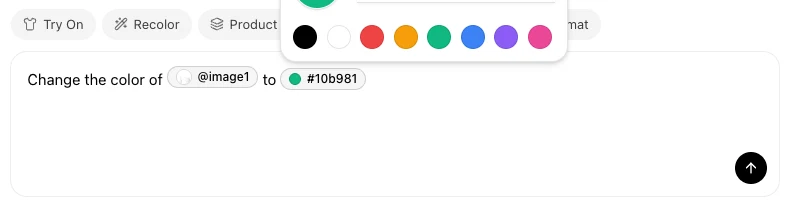
- Choose Recolor and set the target. Recolor is an Edit Shortcut, a fast path that inserts a structured color instruction. Choose a preset swatch or enter a custom hex value. A hex value supplies digital color direction; W3C defines hex notation in the sRGB color space, so it does not describe how physical materials behave under light.
- Keep the edit narrow. Name the garment and panels to change, then identify what should remain untouched. For example: “Change only the blue knit body of
@image1to/color #8A3F52. Keep the black collar and cuffs, embroidery, buttons, seams, silhouette, background, crop, and lighting unchanged.” Edit one material or color zone at a time when a garment combines several. - Generate and inspect the new Asset. Nightjar saves the output as a new Asset, its record for an uploaded or generated image, while the original remains available for comparison.
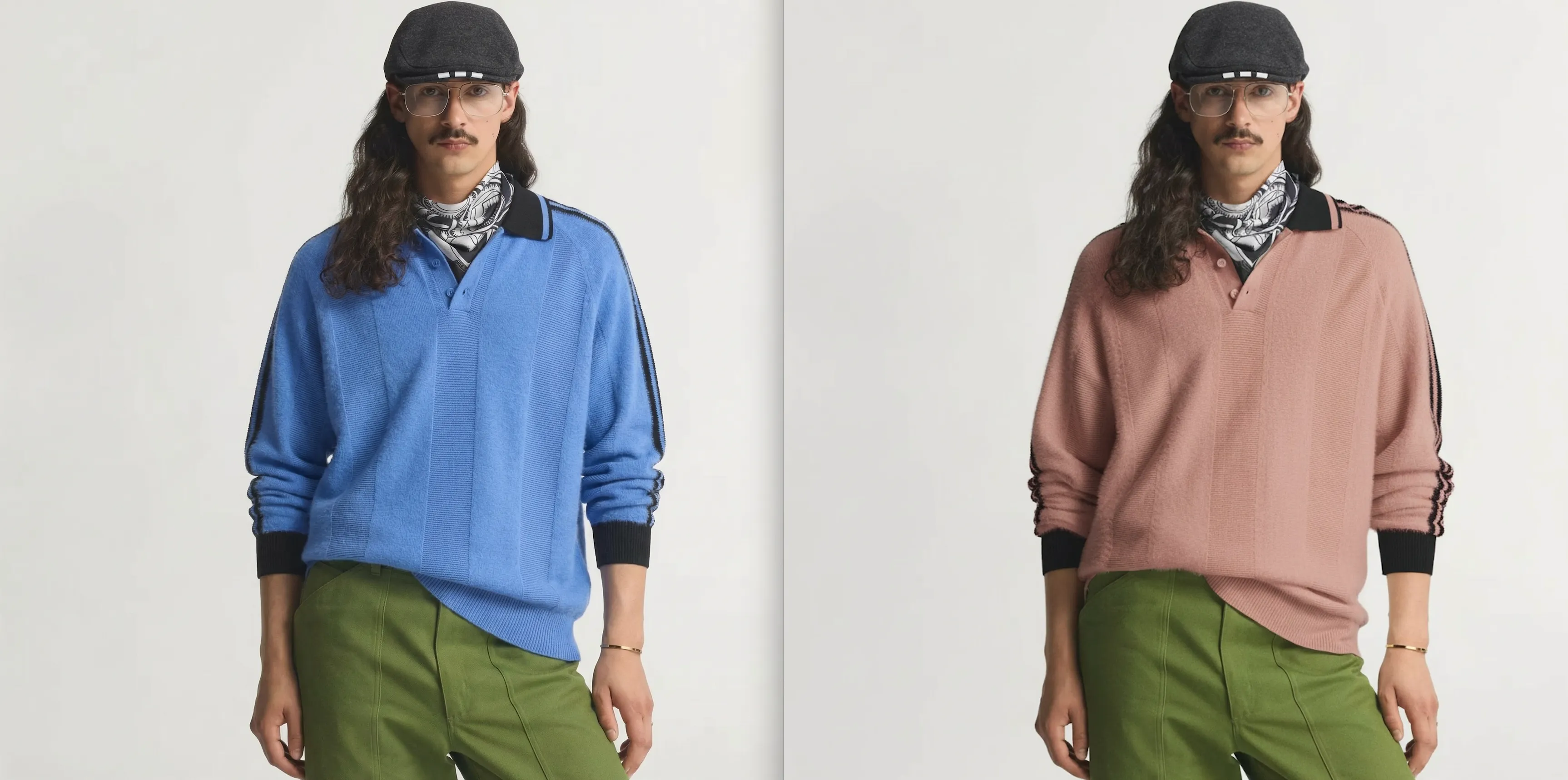
AI recoloring resynthesizes image content rather than applying a locked fabric dye. It may change folds, knit or weave, printed patterns, stitching, logos, trim, fit, or material response while changing color. A source image, swatch, and narrow instruction reduce ambiguity but do not prove preservation.
When is an AI colorway a concept rather than a sellable variant?
| Use | What the AI image establishes | What still needs approval |
|---|---|---|
| Concept colorway | A visual direction for design review, merchandising, or campaign planning | Final dye, material response, construction, and manufactured sample |
| Sellable physical variant | A possible listing image of an item that exists in that color and material | Side-by-side color and product review against the physical item or approved sample |
Keep concept images as working Assets. After a physical colorway is approved for sale, create a separate Product, Nightjar's reusable record for one visually distinct sellable item. Give each colorway verified Product Photos and a factual description of its color, material, construction, and distinguishing details. Sizes may share a Product when their imagery is identical.
Save the photographic direction separately as a Recipe. A Recipe stores the Create-form setup, including the reusable photographic look (Photography Style), background choice, reusable AI person (Fashion Model), body arrangement (Pose), crop (Camera Distance), and output settings, but not the Product. Apply it to each approved colorway Product to reuse that direction.
How should I approve an AI fashion color variant for sale?
- Compare color under controlled conditions. Review the output on a calibrated, profiled display beside the garment or approved swatch under agreed lighting. Check bright areas and shadows, not one sampled pixel.
- Inspect the product at high magnification. Compare the source and output for silhouette, seams, fabric grain or nap, pattern repeat, labels, logos, closures, hardware, transparency, and surface finish.
- Review every view independently. Approval of the front image does not validate the back, detail, or on-model images. A reusable Fashion Model helps keep the person's identity consistent, but it does not validate garment color or fit.
- Use the physical fallback when accuracy carries the claim. Photograph the manufactured sample, or use a color-managed retouch of that photograph, when the listing must faithfully represent color, material response, pattern, regulated information, or safety details. Metallic, pearlescent, fluorescent, translucent, and highly textured fabrics are especially sensitive to lighting and viewing angle.
Nightjar's built-in visual review can retry obvious eligible failures without another Credit, its unit for paid actions, but it is not color certification or publication approval. The Nightjar Terms of Service state that generated output may contain errors or imperfections and make the user responsible for reviewing and validating it before use.
Consistent and on brand AI photoshoots, optimized for conversion.
Nightjar